Your Go-To Guide to Retire in Vietnam
Vietnam is an incredible country to live in. The food is delicious; the people friendly; and the sights are something to behold. With the cost of living crisis in the developed world, many are looking to retire in Vietnam and elsewhere in Southeast Asia to live out their golden years with less stress, more freedom, and with pennies stretching much further. You can learn more about how much it costs to retire in Vietnam here.
Why shouldn’t you live out your retirement on a tropical beach after grinding for decades?
This article will run through what you need to be aware of to move to retire in Vietnam. I myself am not a retiree, but I have been living in Vietnam for close to a decade and I deal with retired clients in my day-to-day work as a financial planner, thus I’m acutely aware of many of the pitfalls that newcomers to Vietnam can fall into.
Things to Be Aware of When Looking to Retire in Vietnam
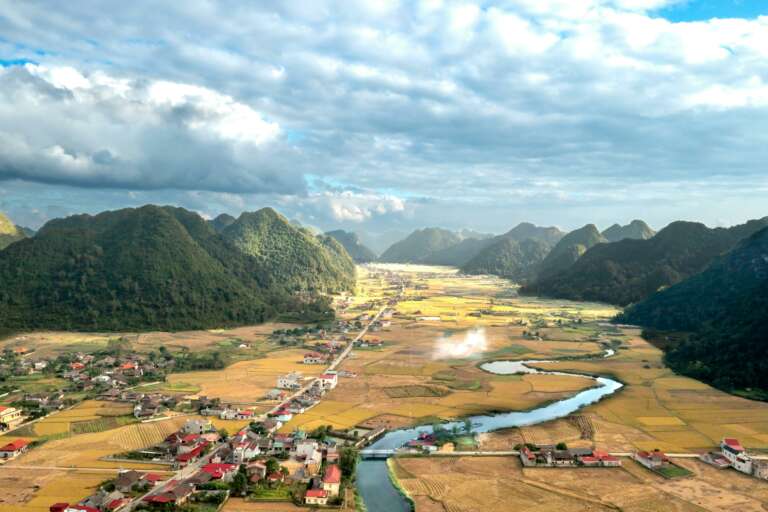
If you’re reading this then you already have some idea of why you’d want to retire in Vietnam. The benefits to the place are pretty obvious. There are, however, some downsides to living here that you might have skipped over, so I’ll outline some of the less obvious ones here:
Lack of retirement visa: This trips a lot of people up. At present, there isn’t an official retirement visa in Vietnam and many retirees living here do so as essentially long-term tourists or they set up/purchase a low-maintenance business and appoint themselves as director to get a work visa. For this reason, Vietnam probably shouldn’t be on your radar if you’re looking for a very relaxed and hands off retirement. It’s more of an active-retirement destination.
Business complications: Doing business in Vietnam can be complicated and many foreigners aren’t fully adapted to the corporate culture, ‘gift-giving’, and unfortunately, aren’t often aware of when they’re being taken for a ride. Be mindful that as a foreigner you are a target for certain dishonest people. It’s not uncommon to see older westerners posting in forums about how they invested in a business or premises only to be pushed out of it later. You can absolutely come here and set up a business, but get some help from trusted professionals on the ground before committing to a deal.
Pollution in major cities: Air pollution, water pollution, noise pollution, and many others are a serious issue in Vietnam. Smaller places like Hoi An don’t have it so bad, but Hanoi and Ho Chi Minh City, and to a lesser extent every other large urban area in the country, suffer from extreme pollution. Trash piles up in fields, rivers turn black and smell bad, factories and exhaust pipes form clouds of smog over the cities that cause lethargy, lung and throat issues, and worse. The best way to avoid this would simply be to live in a smaller city like Da Nang or Nha Trang. Ultimately, Vietnam is a rapidly developing country with poor waste management infrastructure. This issue isn’t going anywhere any time soon.
Foreigners generally can’t buy land: While there are unique cases to the contrary, in most instances foreigners – especially westerners – can’t buy land in Vietnam. You can buy apartments but will often struggle to get a mortgage. The most common way around this is to marry a local, but be aware that you’d be buying land in their name and it isn’t uncommon to see people in legal disputes with former partners over property. Buying apartments outright is generally the way forward, beyond that, just rent.
If you can stomach these issues, then you’ll do just fine retiring in Vietnam. I’m not doing to paint a rosy picture for you and say it’s all rainbows and butterflies. It’s a country with many incredible things to offer – but you do need to be realistic about the downsides too.
Managing Finances While Retiring in Vietnam
You wouldn’t want to retire in Vietnam if you couldn’t access your pension, right? Fortunately this shouldn’t be an issue. Vietnam’s banking and payments infrastructure has developed a lot in the last decade and will likely continue to improve.
- Keep your financial assets offshore: Getting money into Vietnam is quite easy. Getting it out again less so. There are a thousand things that could go wrong if you bring all of your money to Vietnam with you. Speaking with a qualified international financial planner can help you to organise your pension assets in a secure offshore jurisdiction, which can have tax advantages, and use cashflow modeling to ensure that you balance spending in a manner that ensures you won’t run out of money later in retirement.
Feel free to book a call with me here to explore options.
Set up a digital bank account before arriving: Digital banks like Wise, Monzo and Revolut (no endorsement) can help you to quickly and easily send money into Vietnam from abroad to a local bank account. International transfer fees are generally very low with digital banks — check the fees of each one before choosing one. Also, be aware that digital banks generally aren’t covered by the Financial Services Compensation Schemes of most countries. This means you should only ever keep a small amount of money in them just in case something ever happened to the digital bank in question.
Set up a local bank account in Vietnam: Stick to the larger banks. There are official guidelines for opening bank accounts as a foreigner, although many banks have their own take on these policies so real results can vary. Some are easier to deal with than others, and like with all things in Vietnam, it seems that some days people are just in a better mood to help you out — and some days the opposite. You can learn more about setting up a local bank account in Vietnam in my previous article on that topic here.
Keep a liquid emergency fund: Ensure you have six months worth of outgoings, as well as money for a return flight home, set aside in case of emergencies. If your medical insurance policy has an excess/deductible, then make sure you also have this amount set aside in liquid cash.
Ensure you have proper insurance: While many see this as burnt money, I invite you to spend a week in a local government hospital in Vietnam. Some aren’t bad, but some truly are. It depends where you are. The emphasis is 100% on treatment and 0% on service or making you feel at all comfortable throughout your stay, and the cleanliness in the hospitals is often bad. It’s not uncommon for people to catch other illnesses during their stays in the hospital.
Private hospitals, on the other hand, are excellent and very comfortable. I would strongly advise taking out medical insurance. Feel free to book in a call with me if you’d like me to compare international policies (local policies are cheap and you get what you pay for – i.e. government hospitals).
-
Have a valid and up to date will back home: Ensuring your will is up to date before you move to retire in Vietnam can save your loved ones a lot of time and stress. Wills, trusts, and other arrangements can make succession and estate planning much easier and give you peace of mind that your ducks are in a row (and happily quacking away in the turquoise waters of coastal Vietnam). Use a verified and qualified professional to write your will. I can recommend reliable and experienced professionals in the UK and Australia if needed.
-
Beware of scams: Online scams have become increasingly sophisticated, to the point where I even saw a professional financial adviser recently post on LinkedIn about falling prey to one. Gone are the days of the Nigerian Prince emailing you – nowadays scammers use highly sophisticated methods, including AI voice and even live video deepfakes, often mimicking a relative in trouble and playing on their victim’s panic.
Vietnam also has its fair share of scams — this is particularly something that older single men should be aware of. I’m sure you’re all very handsome and charming, gentlemen, but sometimes she really is too good to be true!
Where Are the Best Places to Retire in Vietnam?
This will obviously depend upon personal preference. I’ll cover briefly some points about the main cities that people tend to lean towards.
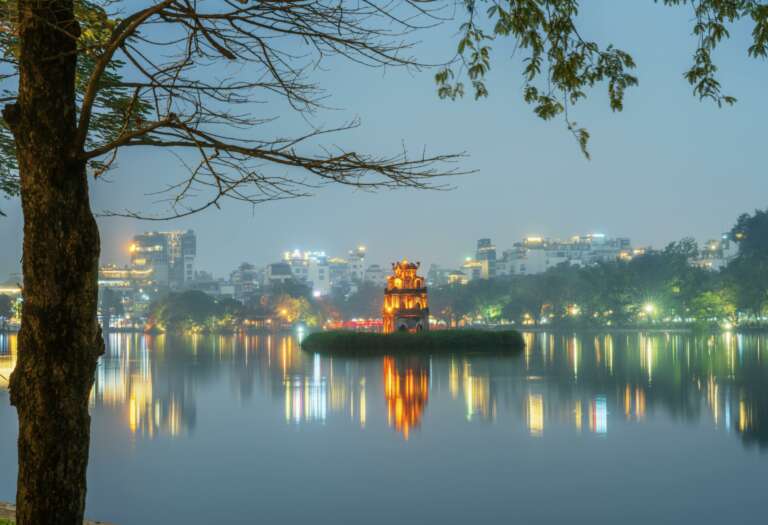
Hanoi
Hanoi is an old-world city. It has a charm of its own, but it’s not the most peaceful retirement destination. It has cold winters, terrible pollution, and constant beeping, noise and traffic. Some like the old French architecture and the cities more laid back vibe over it’s southern counterpart of Ho Chi Minh City (Saigon). If you’re looking for history, then Hanoi it is, but the city is generally the least attractive of the available options for retirees.
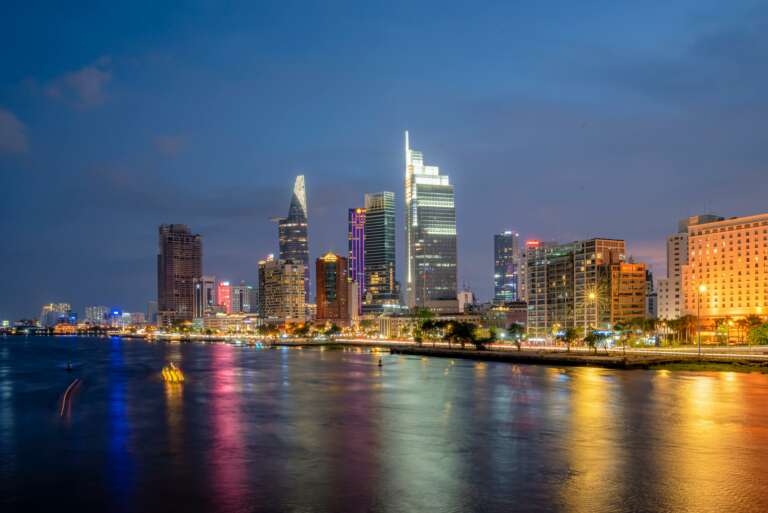
Ho Chi Minh City (Saigon)
Saigon has an almost unparalleled energy. It’s a sprawling urban expanse with a booming nightlife and a much more liberal disposition than it’s somewhat stuffy conservative northern counterpart Hanoi. There are some fairly quiet neighborhoods in Saigon, like the new Sala area and the expat cove of Thao Dien. District 1 is the city’s CBD and has great nightlife options. If you’re still up for a party and have untapped energy then Saigon might just be the place for you. If you’re looking for a more relaxed retirement, then I’d suggest the center of the country.
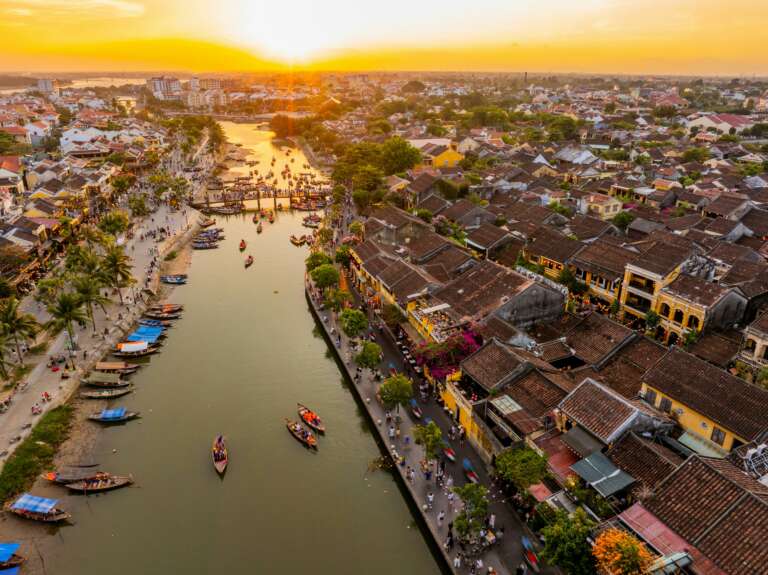
Da Nang & Hoi An
Da Nang is Vietnam’s third city. Hoi An is a well-preserved, although flooded with tourists, town about an hour south of Da Nang. This area is much more laid back than Hanoi and Saigon and the beaches are beautiful. It’s also much cheaper to live here than the bigger cities and you still have good medical facilities and a wide range of food and entertainment options. Da Nang hosts marathons and triathlons throughout the year and the city is surrounded by lush mountains and wonderful getaways. So, if you enjoy sports and the outdoors, this is the place for you!
Outside of the town center, Hoi An is a very charming and relaxed environment with incredible beaches and friendly locals.
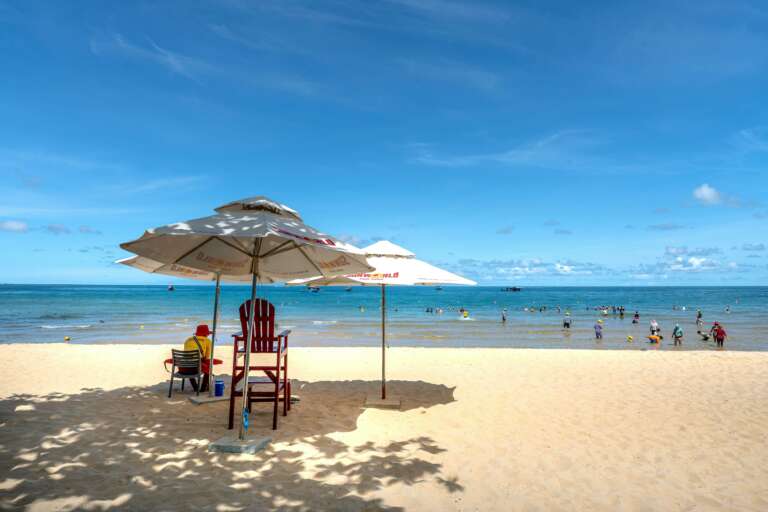
Phu Quoc
I’m biased here. I think Phu Quoc has by far the best value resorts and hotels in Vietnam and it’s perfect for a week in a hammock by the beach. But I think it ends there. I couldn’t see myself living here as it doesn’t have much to offer beyond the hotels. I can imagine it getting very boring – but I could be wrong and it would be interesting to be proved as much!
Nha Trang
Nha Trang is another beach city and popular holiday destination. It’s also notoriously popular with Russian tourists and expats, many of whom take advantage of the many direct flights and deals from Russia. Others are living in the area to avoid being dragged into the war in Ukraine. I’ve not visited Nha Trang, but I’ve heard good things about it. It sounds quite similar to Da Nang.
Mui Ne
Mui Ne is a small and undeveloped beachside town that has a reputation for being one of the most chill places around! While it doesn’t have much in the way of infrastructure, it’s a lovely place to relax.
Vung Tao
Vung Tao is Saigon’s beach getaway. Many Saigonese visit during national holidays and a fair amount of expats end up moving there from Saigon once they’re fed up with the hustle and bustle but still want to be within close proximity to Vietnam’s economic hub. It has enough infrastructure and facilities to be comfortable to retire in.
How Much Does it Cost to Retire in Vietnam?
This will of course depend on your lifestyle. Based on an average lifestyle without too much luxury, and including an average one bedroom apartment in a half decent part of town, medical insurance, food and some entertainment, you’d be looking at around a minimum of $2,000 per month in one of the larger cities and perhaps as low as $1,200 in a smaller city.
Some existing expats/retirees reading this may begin shouting “Oh, I only spend $800 per month” and good for them, but I bet they have terrible health insurance (if any at all), live in a rundown apartment, and don’t get to enjoy any treats throughout the month. Some people are happy with this. The prices I’m quoting would be the minimum for decent living in my opinion, considering my 9 years living here.
Prices of goods:
Again, it varies between the cities, with smaller places often selling the same products for cheaper prices, but here’s a rough lay of the land. In Vietnam, there’s often a way to find services cheaper. Thing is, sometimes you’ll go somewhere and it’s great, but then you’ll go back to the same place the next week and it’ll be terrible — you often find yourself spending a bit more on things just to ensure consistency.
🥘 Eating out for one person in an international restaurant: $10 min.
🦑 Eating out in a fancy restaurant for one person: $30 min.
🍜 Local noodles (pho, bun rieu, etc.): $2
🥖 Banh mi (Vietnamese sandwich): $1
🍛 Indian restaurant for one: $15
🍺 A bottle of local beer/Heineken: $1.50
🍻 Locally produced craft beer: $4
🍷 A glass of house red: $4
☕ Local coffee (ca phe): $1
☕ Cappuccino: $2 to $4
💆♂️ One hour massage: $20
🏢 Rent for one-bed apartment in Hanoi/Saigon: $300 to $1,000+
🏡 Rent for two-bed house in Hoi An: $600+
🦷 Dental cleaning service: $5
🏋️♂️ Decent gym membership: $20 to $100 per month
🏊♀️ Swimming pool access: $5+
👨💻 Monthly co-working space membership: $100
This list is by no means exhaustive, but it should give you a rough idea of what costs to expect in your day-to-day life. If you want a good standard of living then Vietnam will be cheaper than the West. But you might find yourself surprised.
Things like gym memberships and swimming pools are actually quite expensive here. Imported food (cheese 🧀) is also very expensive. International free trade deals continue to improve costs, but it’s not all cheap, cheap, cheap — especially in the main cities. In the remote provinces you can find accommodation and food for incredibly cheap prices, but this wouldn’t likely be somewhere you’d want to retire given the total lack of English speakers, things to do and facilities.

Conclusion: Is It Worth Retiring in Vietnam?
In one word: visit. Come and stay here for a few months and see if you get a feel for the place. There’s usually a honeymoon phase and then people either learn to live with the negatives in Vietnam, or they can’t stand it and leave. Just be mindful that Vietnam is a developing country and is still catching up in some regards to the rest of the world. In other areas it already surpasses much of the rest of the world, but you will find yourself frustrated by certain aspects of living here — it’s how you react to this that will ultimately determine whether you stay or leave.
Best of luck, and feel free to book in a call if you’d like to have a confidential discussion about how best to manage your financial arrangements when retiring in Vietnam.
Photos in this article were taken by Quang Nguyen Vinh.
Chào